

A beautiful ring can catch the light in seconds. What takes longer to see is what made it beautiful in the first place - the materials, the hands behind it, the way it wears over time, and whether it was created to last beyond a season. That is where sustainable luxury jewelry earns its place. It asks more of design, more of craftsmanship, and more of the standards behind what we choose to wear.
For women who buy jewelry as part of a signature wardrobe, this matters. A piece meant for daily wear, milestone gifting, or a wedding collection should do more than look polished on arrival. It should feel considered from every angle, with enough substance to become part of your story rather than a short-lived trend.
Sustainable luxury jewelry is not just about materials
The phrase is often reduced to a simple idea: recycled metals, natural fibers, responsible sourcing. Those choices matter, but they are only part of the picture. True luxury is never only surface deep, and sustainability should not be either.
A sustainably made fine-looking piece that fades, flakes, or loses its structure after limited wear is still wasteful. In the same way, a durable piece with no transparency around how it was made leaves an important question unanswered. The most compelling sustainable luxury jewelry sits in the balance between beauty, integrity, and endurance.
That balance is what separates heirloom-minded design from disposable fashion jewelry. It is found in plating thickness, in layered construction, in handcrafted finishing, and in whether the maker has treated longevity as a design principle rather than a marketing line.

Why durability belongs in the sustainability conversation
Luxury buyers have become more discerning, and rightly so. A high-end piece should not be judged only by initial shine. It should be judged by how well it keeps its finish, how comfortably it wears, and how it holds its presence after repeated use.
This is where craftsmanship details become meaningful. Thick gold plating, multi-layer techniques, and careful hand assembly are not just technical claims. They directly affect lifespan. Jewelry built with substantial plating and stronger layered construction can resist the quick dullness and visible wear that make lower-quality pieces easy to replace.
And replacement is the hidden cost of cheap jewelry. Buying the same style three times because it tarnishes or breaks is not economical, and it is not sustainable. Pieces built to endure, not just to shine, offer a different kind of value. They ask for a more intentional purchase upfront and repay that decision with longer wear and stronger emotional attachment.
Of course, durability is not absolute. Even well-made jewelry depends on care, storage, skin chemistry, and frequency of use. But when a brand invests in better construction from the beginning, the piece starts from a far more credible place.
The role of natural materials in sustainable luxury jewelry
There is a distinct difference between adornment that imitates nature and adornment that carries it. Genuine gemstones, bio-jewelry elements, and artisan-selected natural materials bring a depth that synthetic alternatives often cannot replicate. Their appeal is visual, but also tactile and emotional.
Natural stones have nuance. Their color shifts. Their inclusions tell the truth about origin. Organic materials used in artisanal jewelry bring warmth and individuality that feel deeply personal on the skin. No two pieces read exactly the same, and that subtle variation is part of the luxury.
Still, natural materials come with trade-offs. They may require more careful handling than purely industrial components. Some gemstones are harder than others. Some organic elements are best suited to certain silhouettes or wearing habits. For the customer, that is not a drawback so much as an invitation to buy with more discernment. The right piece is not just the most striking one. It is the one whose materials suit how you live.
Craftsmanship is where ethics become visible
Sustainability can sound abstract until it takes form in the object itself. Then it becomes visible in finish, proportion, and touch. Handcrafted jewelry often carries this distinction most clearly because you can feel the difference between a piece assembled for volume and one made with patience.
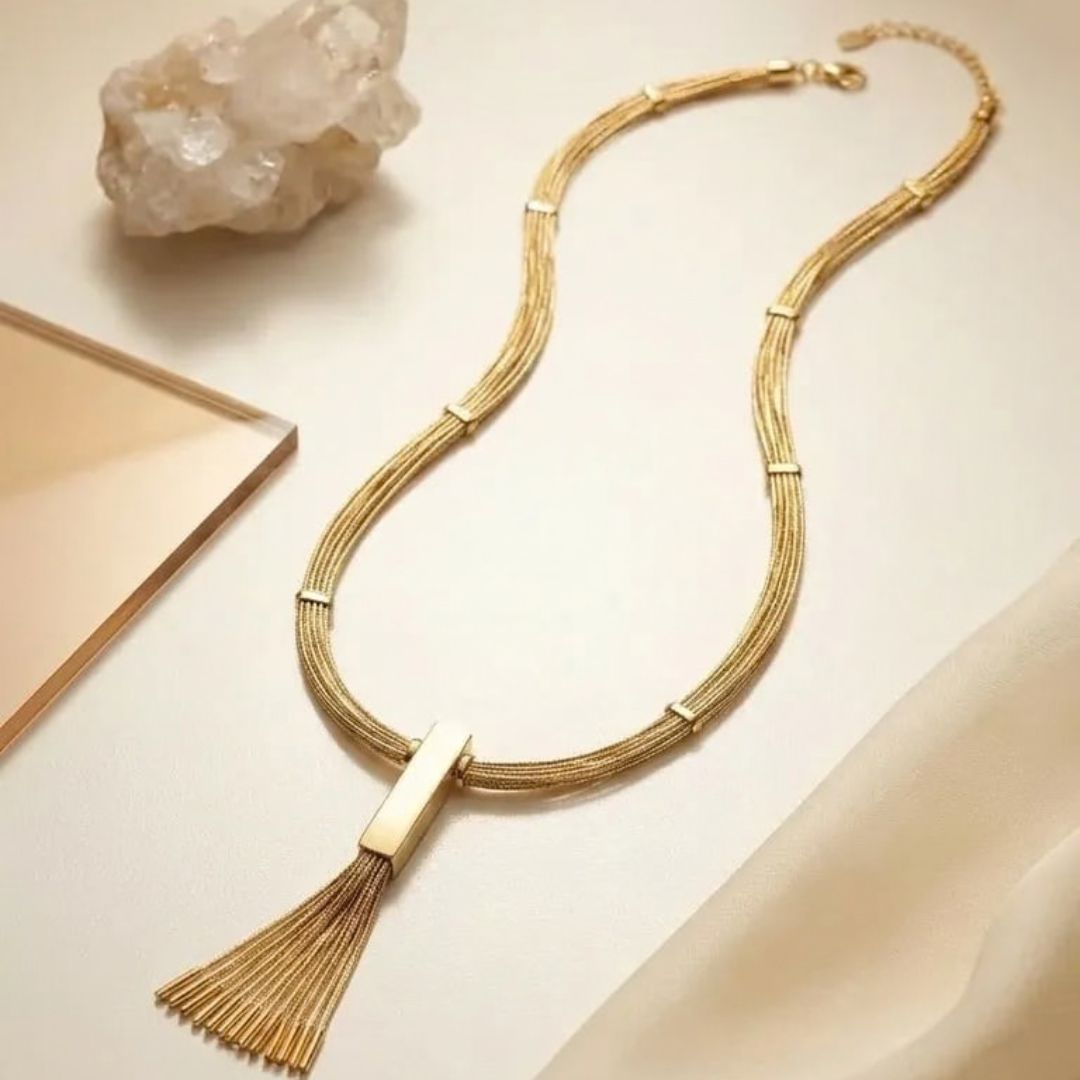
Artisanal work tends to preserve details that mass production smooths away. The curve of a setting, the placement of a stone, the balance of a necklace on the collarbone - these are refinements that shape not only how jewelry looks, but how it lives with the wearer.
There is also a human dimension to craftsmanship that matters in luxury. Pieces rooted in ancestral techniques or regional artistry carry cultural memory as well as design value. When that heritage is respected rather than diluted, jewelry becomes more than accessory. It becomes a continuation of making traditions that deserve to endure.
That is part of what gives eco-luxury its depth. It is not simply cleaner consumption. It is more thoughtful creation.

How to tell if a piece is truly worth the investment
The language around sustainability has become crowded, and not every elegant product description reflects genuine substance. If you are evaluating sustainable luxury jewelry, look beyond broad claims and pay attention to what a brand is willing to explain.
Specificity is usually a strong sign. A brand that can speak clearly about plating thickness, material composition, gemstone authenticity, and how a piece is constructed is often giving you something more trustworthy than vague eco positioning. Details such as 10-micron gold plating or multi-layer craftsmanship tell you the brand understands performance, not only aesthetics.
Design longevity matters too. Sustainable jewelry should feel relevant beyond a single trend cycle. That does not mean it must be minimal or plain. Statement pieces can still be timeless if they are shaped with enough restraint and elegance to keep their allure over the years.
Then there is emotional durability, a factor that deserves more attention than it gets. Jewelry we treasure is jewelry we keep. The pieces that survive wardrobe edits are often the ones with a story, a sense of occasion, or a material identity that feels unmistakable. A wedding earring, a gemstone ring chosen to mark a personal milestone, a handcrafted bracelet that feels unlike anything else in your collection - these pieces tend to stay.
Luxury today asks better questions
The older definition of luxury centered almost entirely on rarity and status. The modern one is more sophisticated. It still values beauty and prestige, but it also asks where something came from, how it was made, and whether its excellence holds up over time.
That shift has changed jewelry for the better. Customers no longer have to choose between desirability and conscience. They can expect both. They can want polish, glamour, and gift-worthy presentation while also wanting artisanal integrity and more responsible material choices.
This does not mean every sustainable piece will look understated or earthy, and it does not mean every luxury piece must present itself as austere. The most interesting brands understand that ethics and seduction can belong in the same object. Jewelry can be sensorial, elevated, and unmistakably feminine while still grounded in values that feel contemporary.
At Purplee Store, that intersection is especially compelling in pieces that unite handcrafted construction, natural materials, and a finish designed for lasting wear. It reflects a broader truth about the category: when sustainability is approached with rigor and style, it does not diminish luxury. It refines it.
Choosing jewelry with a longer future
Buying less, but better, sounds simple. In practice, it requires a shift in mindset. It means resisting pieces that are made to satisfy a moment and leaning toward those crafted to be remembered. It means asking not only, "Do I want to wear this now?" but also, "Will I still love this after the novelty passes?"
That question is especially useful when shopping for gifts, bridal pieces, or personal milestones. These are the purchases that deserve substance. A necklace given to mark an anniversary, a pair of earrings chosen for a ceremony, or a ring bought as a promise to yourself should feel lasting in every sense - visually, physically, and emotionally.
Sustainable luxury jewelry is not about perfection. It is about intention. It is about choosing pieces with enough beauty to desire, enough craftsmanship to trust, and enough meaning to keep close for years. When jewelry is made with that standard in mind, it stops being mere decoration and becomes part of the life it adorns.
The finest pieces do not ask for attention only once. They continue to earn it, wear after wear.

Leave a comment
This site is protected by hCaptcha and the hCaptcha Privacy Policy and Terms of Service apply.